A pescatarian eats fish and shellfish but no meat or poultry, and usually eats eggs and dairy too. Eating out is mostly simple, because most menus have a fish dish, but the catch is in what you cannot see: meat stocks, gravies, lard and gelatine turn up in dishes that look meat-free. This guide covers what to order, what to ask, and the NHS advice on how much fish to eat.
Key facts
- Pescatarian = vegetarian plus fish and shellfish; no meat or poultry.
- The NHS recommends at least 2 portions of fish a week, including 1 oily; a portion is about 140g.
- Hidden meat often comes from stock, gravy, lard, bacon lardons and gelatine.
- Pregnant women and anyone trying to conceive should avoid shark, swordfish and marlin.
- Fish and shellfish are both on the UK’s list of 14 major allergens, so staff can tell you where they are used.
What does a pescatarian eat?
In practice, a pescatarian diet is a vegetarian diet with fish and seafood added. The Vegetarian Society’s criteria for vegetarian products exclude meat, poultry, fish, shellfish and by-products of slaughter such as gelatine and animal rennet, so a pescatarian is someone who keeps those rules except for fish and shellfish. Some people choose it for health, some for environmental reasons, and some as a step towards a fully plant-based diet; our guide to flexitarian dining covers the looser approach.
Which restaurant dishes look pescatarian but may not be?
Most problems come from the base of a dish rather than the main ingredient. These are the ones worth asking about:
| Dish | Possible hidden meat | What to ask |
|---|---|---|
| Risotto and paella | Chicken stock; chorizo in paella | “Is the stock fish or vegetable?” |
| Soups (French onion, minestrone, chowder) | Beef or chicken stock; bacon in chowder | “What stock is the soup made with?” |
| Seafood pasta | Pancetta or ‘nduja in the sauce | “Is there any pork in the sauce?” |
| Fish pie, fishcakes | Usually fine; check the sauce base | “Is the white sauce made with fish stock?” |
| Chips and roast potatoes | Beef dripping, goose or duck fat | “What are the chips cooked in?” |
| Pastry, pies and some desserts | Lard in pastry; gelatine in mousses and jellies | “Is the pastry made with butter or lard?” |
Our list of hidden animal ingredients goes into more detail on gelatine, rennet and other by-products.
How much fish should you eat each week?
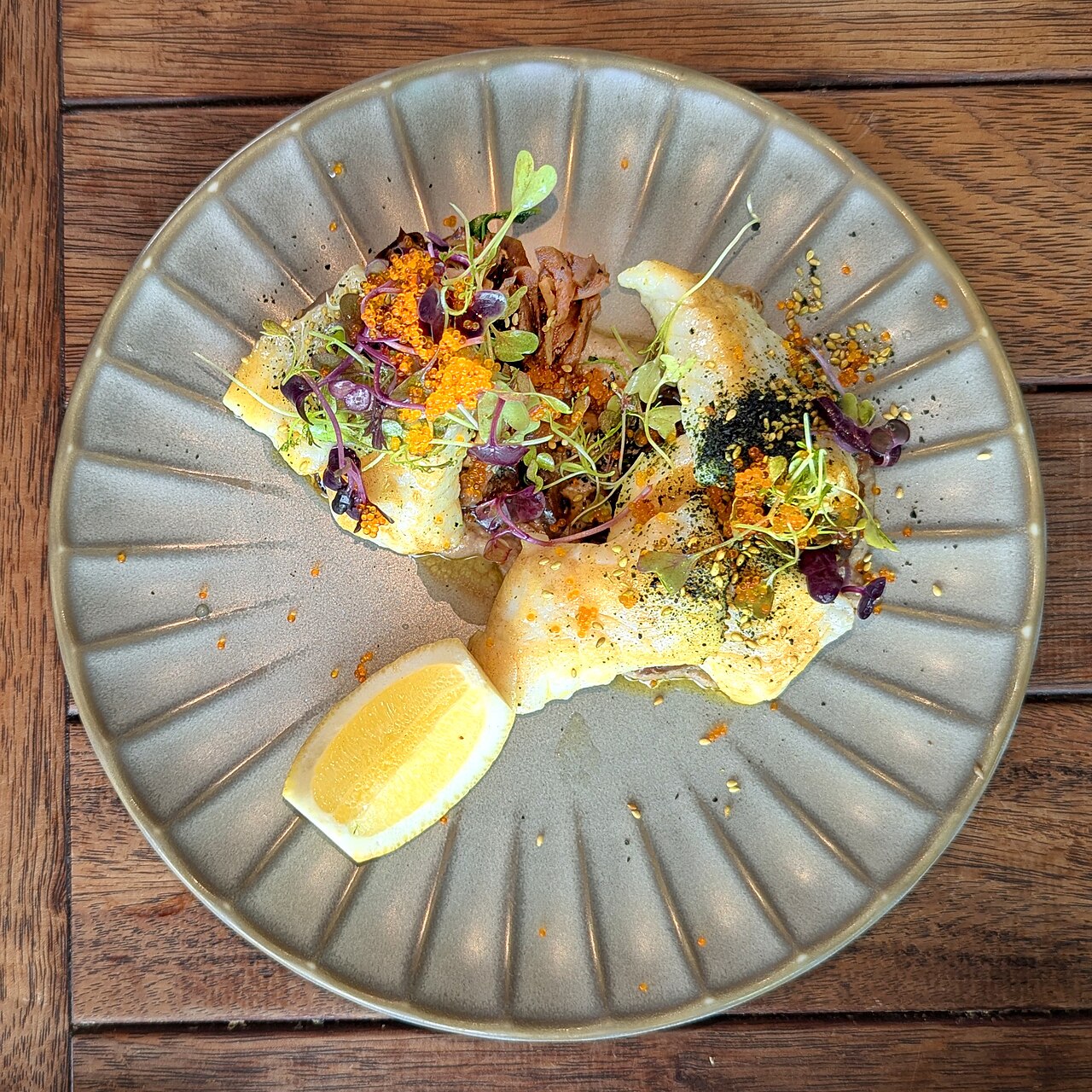
The NHS guidance on fish and shellfish says adults should eat at least two portions of fish a week, including one of oily fish, with a portion being about 140g. Oily fish include salmon, trout, mackerel, sardines, pilchards, herring (and kippers) and sprats; fresh and tinned tuna do not count as oily.
There are upper limits too. Girls and women who may become pregnant, are pregnant or are breastfeeding should have no more than two portions of oily fish a week, and men and boys up to four. Shark, swordfish and marlin should be avoided by children under 16, pregnant women and anyone trying to conceive; other adults should keep them to one portion a week.
What should you order at different kinds of restaurant?
- Pubs: fish and chips (ask about the frying fat), fish pie, mussels, or a vegetarian main.
- Italian: seafood linguine, margherita pizza, or risotto made with vegetable or fish stock.
- Indian: fish curries, prawn dishes and most vegetable dishes; ask whether the base gravy contains meat stock.
- Japanese: sushi, sashimi and tempura fit well; check that ramen broth is not pork-based (tonkotsu is).
- Thai and Vietnamese: fish sauce and shrimp paste are fine for you, but check soups for chicken or pork stock and stir-fries for minced pork.
- Spanish tapas: gambas, boquerones and patatas bravas; avoid dishes with chorizo or jamón.
Raw and lightly cooked shellfish, such as oysters, carry a higher risk of food poisoning. The NHS advises older people, pregnant women, young children and anyone with a weakened immune system to avoid them.
How can you make ordering easier?
- Say “I eat fish, but no meat or poultry” rather than “I’m pescatarian”; not every member of staff knows the word.
- Ask about stock and cooking fat, not just the named ingredients.
- If you also avoid fish for some meals, the vegetarian dishes are your fallback; our guide to vegetarian vs vegan explains how kitchens label them.
- If you have a fish or shellfish allergy in the group, remember both are major allergens, and see our shellfish allergy guide.
Frequently asked questions
What is the difference between a pescatarian and a vegetarian?
A vegetarian eats no meat, poultry, fish or shellfish. A pescatarian follows a vegetarian diet but also eats fish and shellfish.
Do pescatarians eat eggs and dairy?
Most do, in the same way as most vegetarians. It is a personal choice, so tell the restaurant if you avoid them.
Can pescatarians eat chips from a chip shop?
It depends on the frying fat. Some chip shops use beef dripping, which is not suitable. Ask what the chips are fried in.
How much oily fish is too much?
NHS advice is no more than 2 portions a week for girls and women who may become pregnant, are pregnant or are breastfeeding, and up to 4 for men and boys.
Is fish sauce suitable for pescatarians?
Yes. Fish sauce is made from fish, so it fits a pescatarian diet, though it is not suitable for vegetarians or vegans.
The short version
Eating out as a pescatarian is usually easy; the main risks are meat stocks, frying fats and gelatine. Ask about the base of a dish, follow the NHS portion advice on oily fish, and browse more ideas in our Vegan & Vegetarian section.