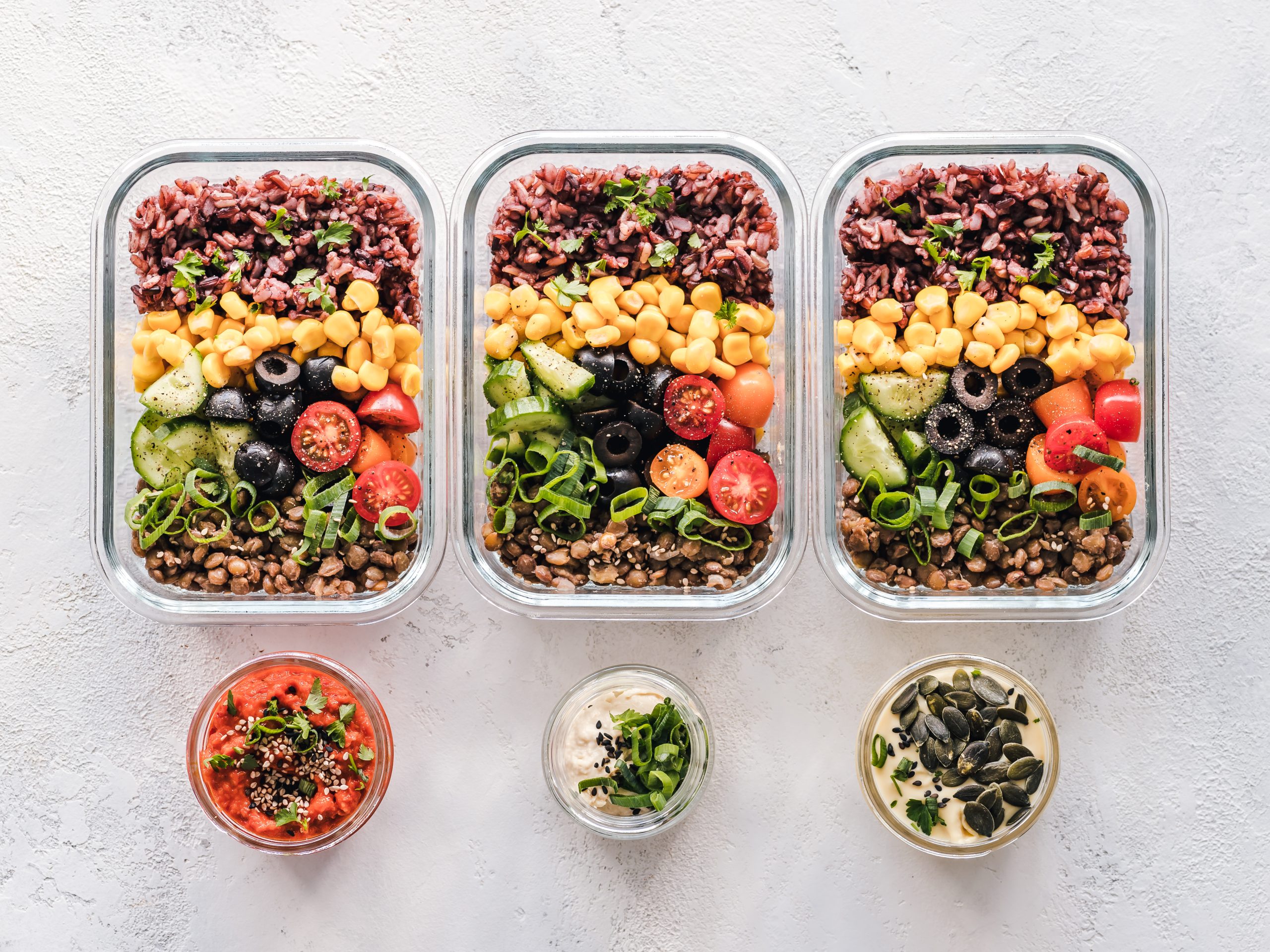
Meal prep for special diets means cooking a few safe, labelled meals in one session so you always have something suitable to eat. The routine is simple: plan a short menu around your restrictions, cook the riskiest items first in a clean kitchen, cool food quickly, portion it into labelled containers and follow clear time limits for the fridge and freezer. Done well, it also gives you a back-up on days when eating out is not straightforward.
The extra steps compared with ordinary batch cooking are about separation and labels, not complicated recipes.
Key takeaways
- Plan three or four meals you know are safe, not a whole new menu.
- Clean surfaces and equipment before you start, and cook the strictest meals first.
- Get cooked food into the fridge within two hours and eat leftovers within 48 hours, or freeze them.
- Label every container with the dish, the date and what it is free from.
- Keep separate spreads, boards or a toaster where crumbs could carry gluten.
Step 1: Plan a short, safe menu
Start with what already works. Pick three or four dishes you have eaten safely before and that reheat well: stews, curries, grain bowls, soups, baked vegetables and lentil dishes are good candidates. Write a list of every ingredient, including stock cubes, sauces and spice blends, and check each label when you shop rather than relying on memory, because recipes change.
For a household with more than one diet, aim for a shared base with separate toppings. A big pan of plain rice or roasted vegetables can feed everyone; the cheese, nuts or meat go on afterwards, portion by portion.
Step 2: Set up a clean kitchen
UK Food Standards Agency advice for consumers with food allergies recommends cleaning surfaces and equipment thoroughly and washing hands and cloths before preparing food, because allergen cross-contamination can happen at any point.
For gluten, Coeliac UK’s guidance on cross contamination at home is reassuringly practical. It says standard washing-up liquid or a dishwasher will remove gluten and that you do not need separate cloths or sponges. It suggests separate condiments, or at least clean cutlery in shared butter, jam and spreads; toaster bags or a separate toaster for gluten-free bread; separate bread boards; and clean oil or a separate fryer for gluten-free food. Our checklist on gluten cross contamination has the restaurant version of the same questions.
Step 3: Cook in a sensible order
Order matters when several diets share one kitchen. A simple rule is strictest first:
- Cook the meal for the most restricted person first, with clean pans and utensils.
- Cover it and move it away from the work area before anything else starts.
- Cook the less restricted dishes next.
- Add allergen-containing toppings last, on a separate board.
If you also want to keep salt down, batch cooking is an easy place to do it, because you control the stock and seasoning. Our guide to low sodium eating out explains where salt usually hides in restaurant dishes, and the same list applies to ready-made sauces at home.
Step 4: Cool, chill and freeze within safe limits
This is where batch cooking most often goes wrong. The Food Standards Agency guide on how to chill, freeze and defrost food safely sets out the key numbers:
| Stage | FSA guidance |
|---|---|
| Fridge temperature | Between 0 and 5°C |
| Getting leftovers chilled | In the fridge within two hours of cooking |
| Eating chilled leftovers | Within 48 hours, or freeze them |
| Freezing shop-bought food | Up until midnight on the use-by date |
| Defrosting | In the fridge, so the food does not get too warm |
| After defrosting | Use within 24 hours |
| Reheating cooked, frozen food | Only reheat once |
In practice, that means splitting a big batch: two or three portions in the fridge for the next couple of days and the rest straight into the freezer once cooled. Shallow containers help food cool faster than one deep pot.
Step 5: Labels, the habit meal prep for special diets depends on
Labels stop mistakes when someone else opens the fridge. Write three things on each lid:
- The dish name.
- The date it was cooked.
- What it is free from, such as “gluten-free” or “no milk, no egg”.
For allergies, use a separate shelf or a coloured lid for safe food, so it is obvious at a glance. If you take meals to work, keep them in a sealed container and a separate bag.
Frequently asked questions
How long can batch-cooked meals stay in the fridge?
The Food Standards Agency advises eating leftovers within 48 hours, or freezing them if you will not get to them in time. Keep the fridge between 0 and 5°C.
Do I need a completely separate kitchen for coeliac disease?
Coeliac UK says normal washing up removes gluten, so most kitchens can be shared with care. The main extra measures are crumb control: separate spreads, a separate toaster or toaster bags, and separate bread boards. If your specialist team has given you stricter advice, follow it.
Can I reheat a frozen meal more than once?
No. The FSA guidance is to reheat cooked food that has been frozen only once, so freeze in single portions and take out only what you will eat.
Start with one session this weekend
Choose two dishes, cook them in the strictest-first order, chill and label them, and freeze half. One afternoon gives you several safe meals and a calmer week. For more ideas on living well with dietary needs, browse our Lifestyle section.