Hanukkah food centres on dishes fried in oil, such as potato latkes and jam-filled doughnuts (sufganiyot), eaten in memory of the Temple oil that, by tradition, lasted eight days. In 2026 the festival begins at sundown on Friday 4 December and ends at sundown on Saturday 12 December. If you are eating out during Hanukkah, or hosting guests who keep kosher, the key questions are whether a venue is kosher-supervised and whether it serves meat or dairy.
Key facts
- Dates 2026: sundown Friday 4 December to sundown Saturday 12 December.
- Signature foods: latkes (potato pancakes) and sufganiyot (filled doughnuts), both fried in oil.
- Dairy dishes such as cheese pancakes also have a Hanukkah tradition, linked to the story of Judith.
- In a kosher restaurant, meat and dairy are not served together, so latkes come with apple sauce in a meat venue and sour cream in a dairy one.
- A hechsher (certificate of kosher supervision) is what tells you a restaurant or bakery is kosher.
Why is Hanukkah food fried in oil?
Hanukkah, the eight-day festival of lights, marks the rededication of the Temple in Jerusalem after the Maccabean revolt. Tradition holds that a single day’s supply of oil kept the Temple lamp burning for eight days. As the Farmers’ Almanac puts it, foods cooked in oil are eaten in memory of the oil that lasted eight days. That is why so many Hanukkah dishes, from latkes to doughnuts, are fried.
What are the traditional Hanukkah foods?
| Dish | What it is | Typical tradition |
|---|---|---|
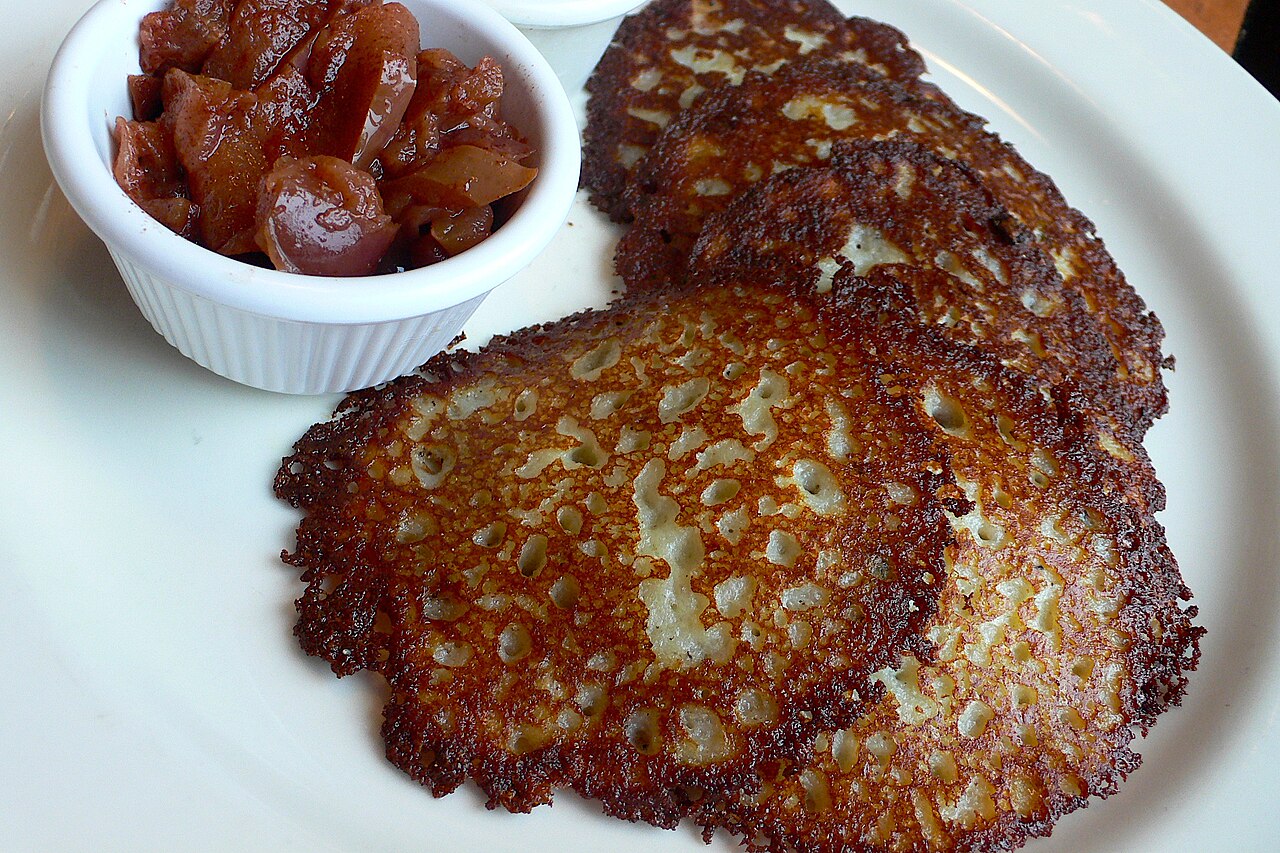
| Latkes | Grated potato and onion pancakes, shallow-fried | Ashkenazi (Central and Eastern European) |
| Sufganiyot | Deep-fried doughnuts filled with jam, custard or chocolate | Especially popular in Israel |
| Cheese pancakes or fritters | Fried dairy pancakes, sometimes ricotta-based | Linked to the story of Judith |
| Bimuelos / loukoumades | Fried dough balls with honey or syrup | Sephardi and Greek Jewish communities |
| Brisket or roast chicken | Slow-cooked meat main course for a family meal | Common at a festive dinner |
Potato latkes are younger than many people assume. ReformJudaism.org notes that the potato latke recipe was not created until the end of the 18th or early 19th century, once potatoes had become a staple food in Eastern Europe, and links the dish to the early-winter season when goose fat was plentiful for frying. The same article retells the story of Judith, who gave the general Holofernes salty cheese and wine; in many communities that story is the origin of eating dairy foods at Hanukkah.
How do kosher restaurants handle Hanukkah dishes?
A kosher restaurant is usually either meat (fleishig) or dairy (milchig), because Jewish dietary law does not allow meat and dairy to be cooked or eaten together. That changes how Hanukkah food is served:
- Meat restaurants serve latkes with apple sauce, not sour cream, and doughnuts made without butter or milk (parev).
- Dairy restaurants can offer latkes with sour cream, cheese pancakes and cream-filled doughnuts, but no meat.
- Fish is parev (neither meat nor dairy), so it often appears on both kinds of menu.
- Bakeries selling sufganiyot carry their own supervision; the certificate should name the supervising authority.
Our guide to kosher restaurants explains supervision, certificates and what “kosher-style” does and does not mean.
What should you know if you are invited to a Hanukkah meal?
- Ask before bringing food. If your hosts keep kosher, a home-baked gift may not be usable; a sealed product with a recognised kosher symbol, flowers or wine with kosher certification are safer choices.
- Arrive in time for candle lighting if invited for it; the menorah is lit after nightfall (earlier on Friday, before the Sabbath begins).
- Do not mix meat and dairy on your plate at a kosher meal; follow the host’s lead.
- Mention allergies early. Fried dishes are often cooked in shared oil, and doughnuts may contain egg and milk; see our dinner party dietary needs guide.
How can you enjoy Hanukkah food with other dietary needs?
Latkes are naturally made with flour or matzo meal as a binder, so ask for a gluten-free version if you have coeliac disease; potato flour or a gluten-free flour works. Doughnuts contain wheat, egg and often milk. For vegans, latkes can be made with a flax or chickpea binder instead of egg, and parev doughnuts are already dairy-free, though they usually contain egg. Fried food is also high in fat, so if you are watching your heart health, a baked latke or a smaller portion is a sensible swap.
Frequently asked questions
When is Hanukkah in 2026?
Hanukkah 2026 begins at sundown on Friday 4 December and ends at sundown on Saturday 12 December.
Why do people eat fried food at Hanukkah?
Fried foods recall the tradition that one day’s supply of oil kept the Temple lamp burning for eight days.
What do you eat with latkes?
Latkes are usually served with apple sauce or sour cream. At a kosher meat meal, sour cream is not served, because meat and dairy are not eaten together.
What are sufganiyot?
Sufganiyot are deep-fried doughnuts, usually filled with jam, custard or chocolate. They are especially popular in Israel during Hanukkah.
Are latkes gluten-free?
Not usually. Most recipes bind the potato with flour or matzo meal, which contain gluten. A gluten-free version can be made with potato flour or another gluten-free flour.
The short version
Hanukkah food is about frying in oil: latkes, sufganiyot and, in many families, dairy dishes too. If you eat out during the festival, check the supervision and whether the venue is meat or dairy. More guides are in our Halal & Kosher section.