Lupin is a legume, from the same plant family as peanuts, whose seeds are ground into flour and used in breads, pastries, pasta and some gluten-free and vegan products. It is one of the UK’s 14 major allergens, so it must be emphasised on ingredients labels and declared by restaurants and cafés. Lupin allergy is less common in the UK than in mainland Europe, which is exactly why it catches people out: few diners think to ask about it.
Key facts
- Lupin is a legume related to peanut; its flour is used in baked goods and pasta.
- It is one of the 14 major allergens that UK food businesses must declare.
- It is used more often in mainland Europe, so imported bread, pastries and pasta are the usual sources.
- Some people with peanut allergy also react to lupin, but only a small number, according to Anaphylaxis UK.
- On labels, look for lupin, lupine, lupin flour, lupin seed or lupin bean.
What is lupin, and where is it found?
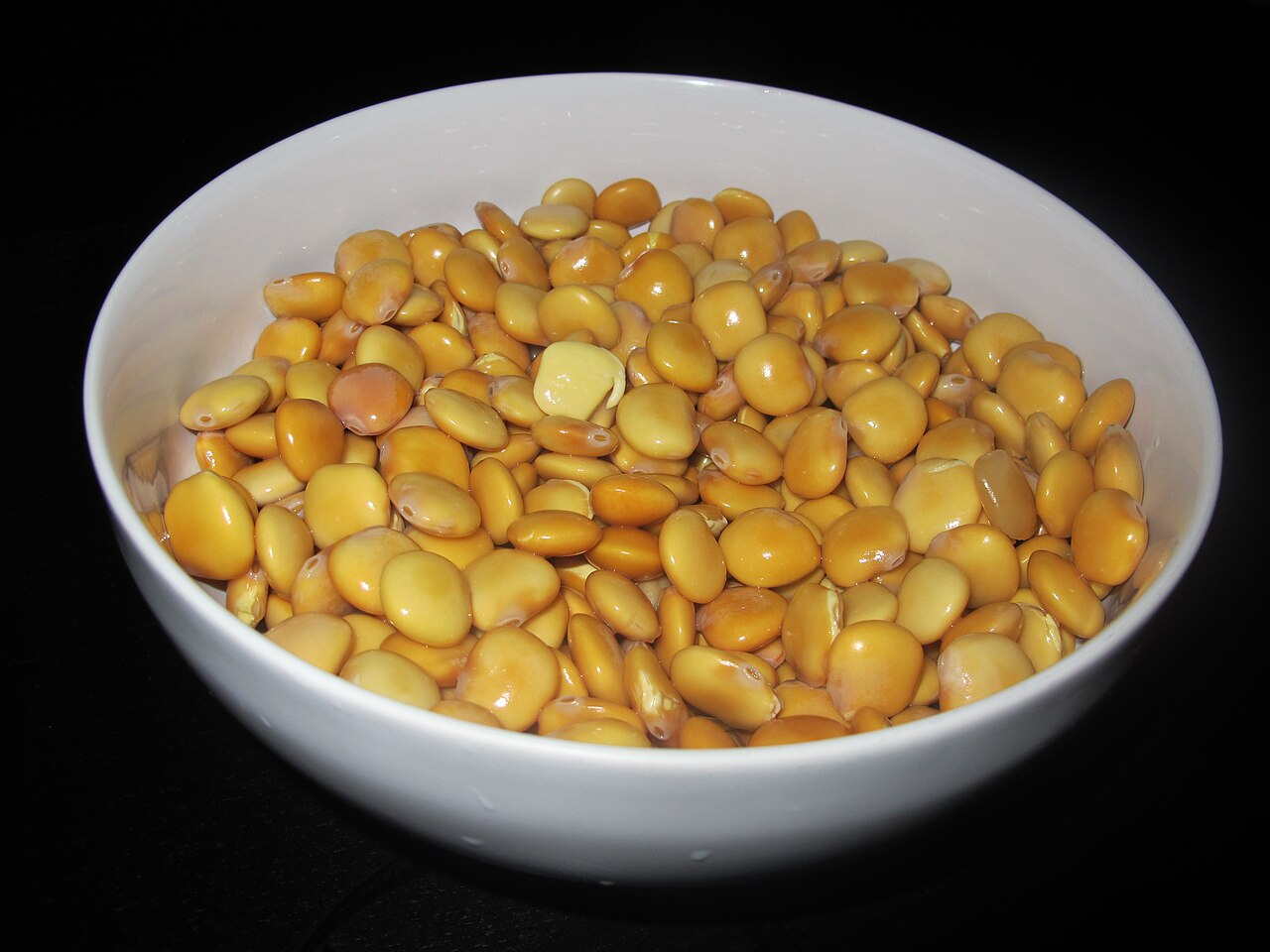
Lupins are flowering plants. Several species are grown for their seeds, which are eaten whole as a snack in parts of the Mediterranean (often sold pickled in brine as lupini beans) or milled into flour. Anaphylaxis UK lists the foods where lupin is most likely to appear in the UK: pastry cases, pies, waffles, pancakes, biscuits, products coated in breadcrumbs, processed meats, pizzas and some vegan and gluten-free products. It also notes that bread sold at French markets in the UK may contain lupin flour.
Lupin flour is high in protein and naturally gluten-free, which is why it turns up in “free-from” baking and plant-based foods. If you have a lupin allergy and also need gluten-free food, read the label on every gluten-free bread or pasta rather than assuming it is safe; our guide to gluten-free labelling explains how those claims work.
Is lupin allergy linked to peanut allergy?
Lupin and peanut share similar proteins, so some people with a peanut allergy also react to lupin. Anaphylaxis UK is careful to say that only a small number of people with peanut allergy are also allergic to lupin, and that a peanut allergy does not automatically mean you need to avoid lupin. If you have a peanut allergy and are unsure, ask your allergy clinic; do not test it yourself in a restaurant. Our nut allergy guide covers peanuts and tree nuts in more detail.
What are the symptoms of a lupin allergy?
Symptoms usually start quickly, within minutes of eating the food. Mild to moderate reactions can include hives, swelling of the face, lips or eyes, tingling in the mouth, stomach pain, vomiting or diarrhoea. Anaphylaxis is a severe reaction affecting the airway, breathing or circulation, such as throat swelling, difficulty breathing, or collapse. It is a medical emergency: use an adrenaline auto-injector if you have one and call 999.
Which dishes should you ask about when eating out?
| Where you are | Dishes to check | Why |
|---|---|---|
| Bakery or café | Croissants, brioche, continental breads, pastries, waffles | Lupin flour is used in some European baking |
| Italian or French restaurant | Fresh or imported pasta, pastry cases, tarts | Imported products are the most common source |
| Gluten-free or vegan menu | Gluten-free bread, pizza bases, plant-based burgers | Lupin flour adds protein and replaces wheat |
| Pub or bistro | Breaded fish, scampi, schnitzel, pies | Breadcrumbs and pastry can contain lupin |
| Mediterranean deli | Pickled lupini beans on a mezze or antipasti plate | These are whole lupin seeds |
How do you eat out safely with a lupin allergy?
- Name it clearly. Say “I’m allergic to lupin, a legume flour” because staff may not recognise the word.
- Ask for the allergen record. Restaurants must be able to tell you which dishes contain any of the 14 allergens, lupin included.
- Ask about bought-in items. Bread, pastry and desserts are often bought in; the supplier’s label will show lupin in bold.
- Say that small amounts matter and ask about cross-contamination in shared fryers and on baking trays.
- Carry a chef card. A written card helps, especially abroad; see our allergy chef card guide.
- Check grab-and-go labels. Under Natasha’s Law, food made and packed on site must list lupin in its ingredients.
Lupin’s place on the allergen list means it also appears on the Food Standards Agency’s PPDS labelling guidance, so a sandwich or pastry packed in a café kitchen should show it in the ingredients.
What about travelling in Europe?
Because lupin is used more widely in countries such as France and Italy, take extra care with bread, pastries and pasta when travelling. EU rules also list lupin as a major allergen, so restaurants and bakeries there must be able to tell you about it. A translated chef card and our guide to travelling with food allergies will help.
Frequently asked questions
Is lupin one of the 14 allergens?
Yes. Lupin is one of the 14 major allergens that UK food businesses must declare, and it must be emphasised in ingredients lists on prepacked food.
Can I eat lupin if I am allergic to peanuts?
Not necessarily. Some people with a peanut allergy react to lupin, but Anaphylaxis UK says only a small number do. Ask your allergy specialist before eating it.
What foods contain lupin flour?
Lupin flour can be found in pastry, pies, waffles, pancakes, biscuits, breaded products, processed meats, pizza, pasta and some gluten-free and vegan products, especially those imported from mainland Europe.
What are lupini beans?
Lupini beans are whole lupin seeds, usually sold pickled in brine as a snack or antipasti in Mediterranean cuisine. They are not suitable for anyone with a lupin allergy.
How quickly does a lupin allergy reaction start?
Reactions usually start within minutes of eating lupin. Severe reactions (anaphylaxis) need an adrenaline auto-injector, if prescribed, and a 999 call.
The short version
Lupin is an easy allergen to overlook because it hides in flour. Ask about bread, pastry, pasta and free-from products, name the allergen clearly, and lean on the allergen information restaurants are required to keep. More guides are in our Food Allergies section.